
Burke County Civil Docket Searches
The official Burke civil search path covers State and Superior files. Enter a case number if a notice gave you one. Otherwise search by Name and keep the Filed From and Filed To range tight. The screen sometimes throws an internal error. That glitch does not mean the Burke County civil docket lacks your case.
Each court owns its own lane. Superior takes general civil, equity, title-to-land, divorce, and domestic work. State hears countywide civil matters beyond Superior's reach. Magistrate handles claims up to $15,000, plus dispossessory, garnishment, and bad checks. Probate keeps estate, will, guardianship, and conservatorship files.
- Read the summons for the court and exact case number.
- Select Civil Search and enter the number first.
- Use a party name and narrow filed-date range only when needed.
- Verify court, date, party roles, and status.
- Read service, motions, settings, orders, and judgment in date order.
- Ask the maintaining clerk for a filed document or certified copy.
Burke Civil Portal Fields
The county's case-management form offers Name, Filed From, Filed To, Search, and Clear. The date box shows a numeric mask. Treat other fields as optional until the form proves otherwise. Do not assume blank dates will return results.
That login panel serves account holders, not public searchers. If the public form throws its session error, restart at the official wrapper. You can also call 706-554-2279, or come to the clerk counter.
Civil Dockets: What They Show
A Burke County civil docket works as an index, not the whole file. Expect the court, case number, filing date, case type, status, judge, party roles, service events, pleadings, motions, hearings, and judgment entries. A document link may still demand PeachCourt or a clerk request. Pull the entered order itself, since a line labeled judgment rarely spells out its terms.
| Case identity | Court, case number, type, filing date, status, and judge when shown. |
|---|---|
| Parties | Plaintiff and defendant or petitioner and respondent roles. |
| Service | Summons, service, return, waiver, publication, or failed service. |
| Filings | Complaint, answer, counterclaim, motion, response, and entered order. |
| Result | Dismissal, settlement, consent, default, final judgment, or transfer. |
Burke Service and Return Entries
Service drives a civil file. Scan for summons issuance. Look for sheriff or private service, a return, waiver, publication, or a failed attempt. A complaint on the docket alone does not prove the other side got valid notice. When notice matters, request the return directly.
Burke's older readable schedule listed $50 for general civil sheriff service. It listed $25 for dispossessory service. Treat those figures as historical and check them against the county's July 2024 fee PDF. What service costs and whether it succeeded are two separate questions.
What Cases Fill the Civil Docket
Civil dockets here spread across several offices. Superior and State share the unified clerk but hold different jurisdiction. Magistrate keeps small-claim and dispossessory files, while Probate runs its own shop. A deed or lien search at GSCCCA adds land-record context. It never replaces the civil case docket.
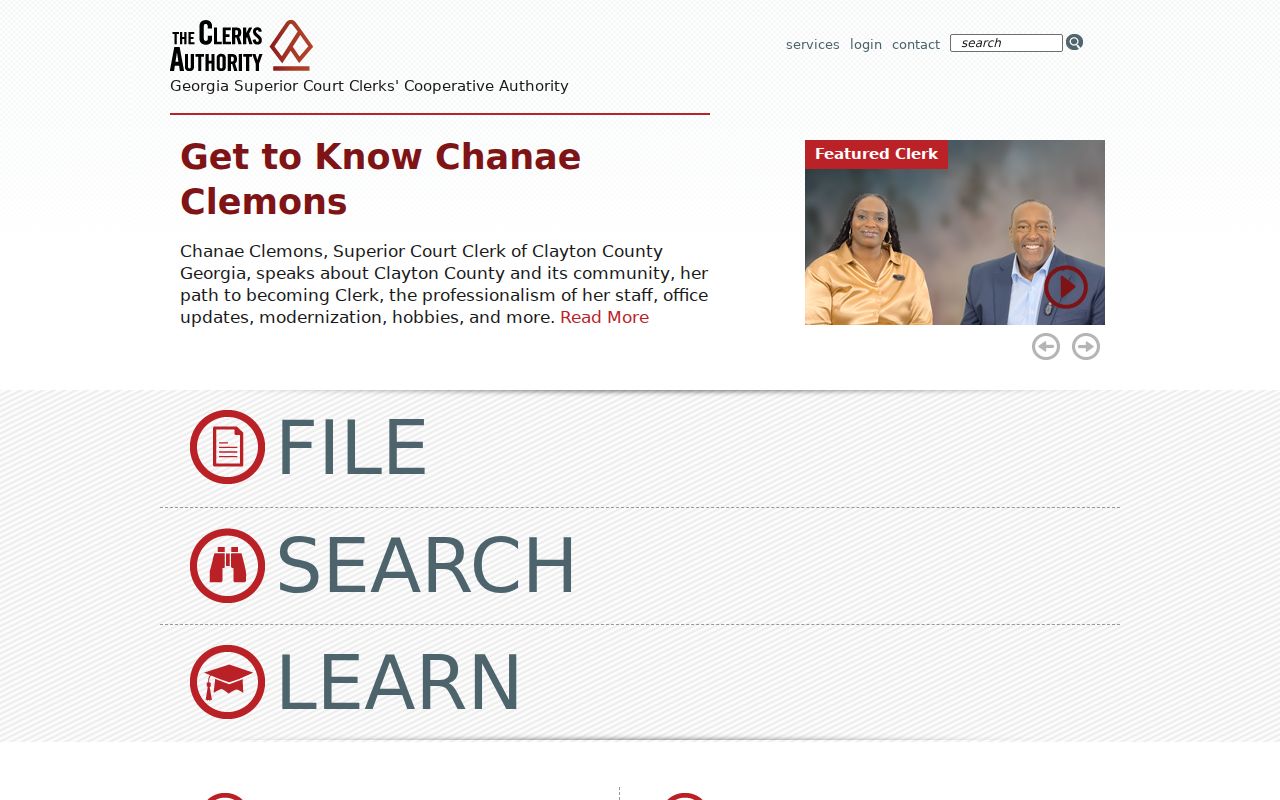
The Georgia Superior Court Clerks' Cooperative Authority supplies that separate land-record layer.
- General civil, equity, title-to-land, divorce, and domestic matters in Superior Court
- Countywide nonexclusive civil matters in State Court
- Claims up to $15,000, dispossessory, and garnishment in Magistrate Court
- Estate, will, guardianship, and conservatorship matters in Probate Court
- Appeal and transfer records that may create entries in two courts
Burke Magistrate Filing Routes
The official Magistrate page links TurboCourt tools for small claims and dispossessory filings. Filing through a vendor is one thing; viewing the public docket is another. Call the Magistrate office at 706-554-4281 to locate a file, verify service, or ask about a hearing or judgment.
The office lists PO Box 401, Waynesboro, GA 30830. Weekday hours are 8:00 AM to 5:00 PM. Confirm where to inspect records before you drive over.
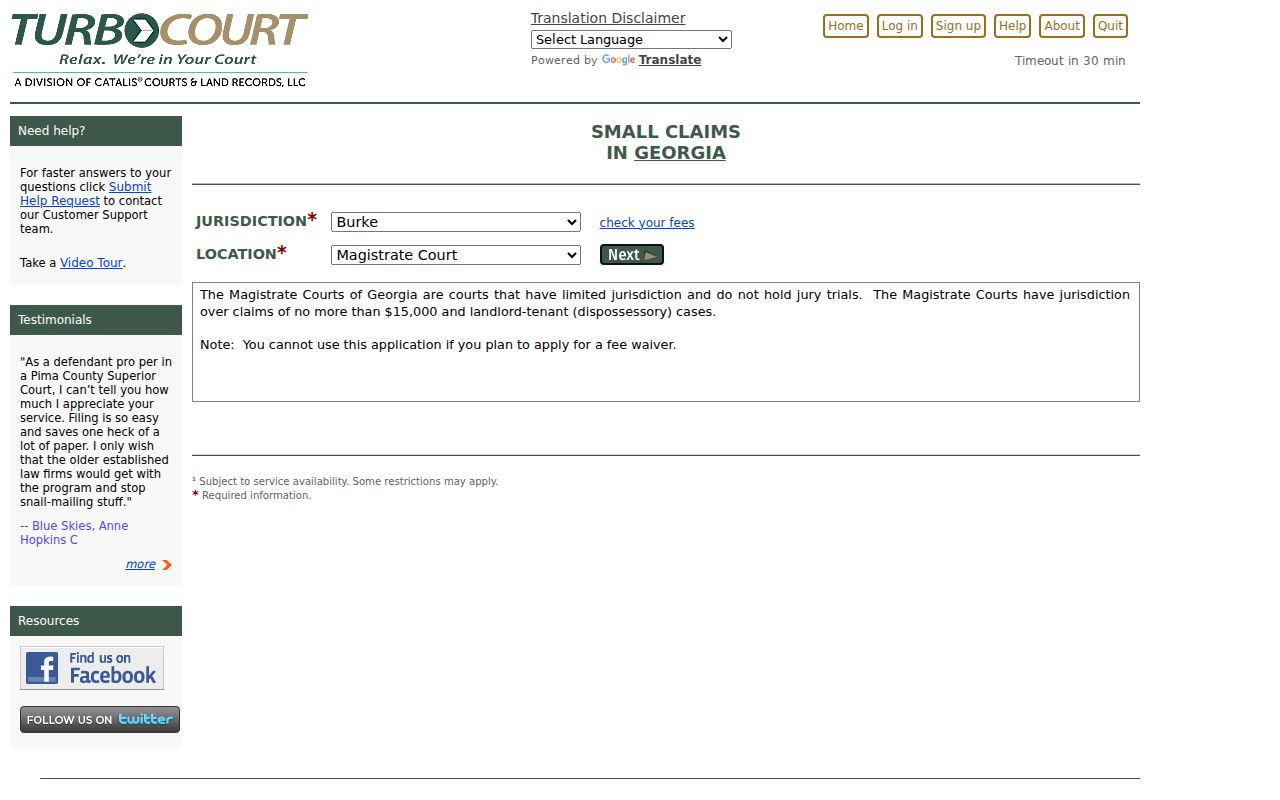
The Burke small-claims application shows one filing route.
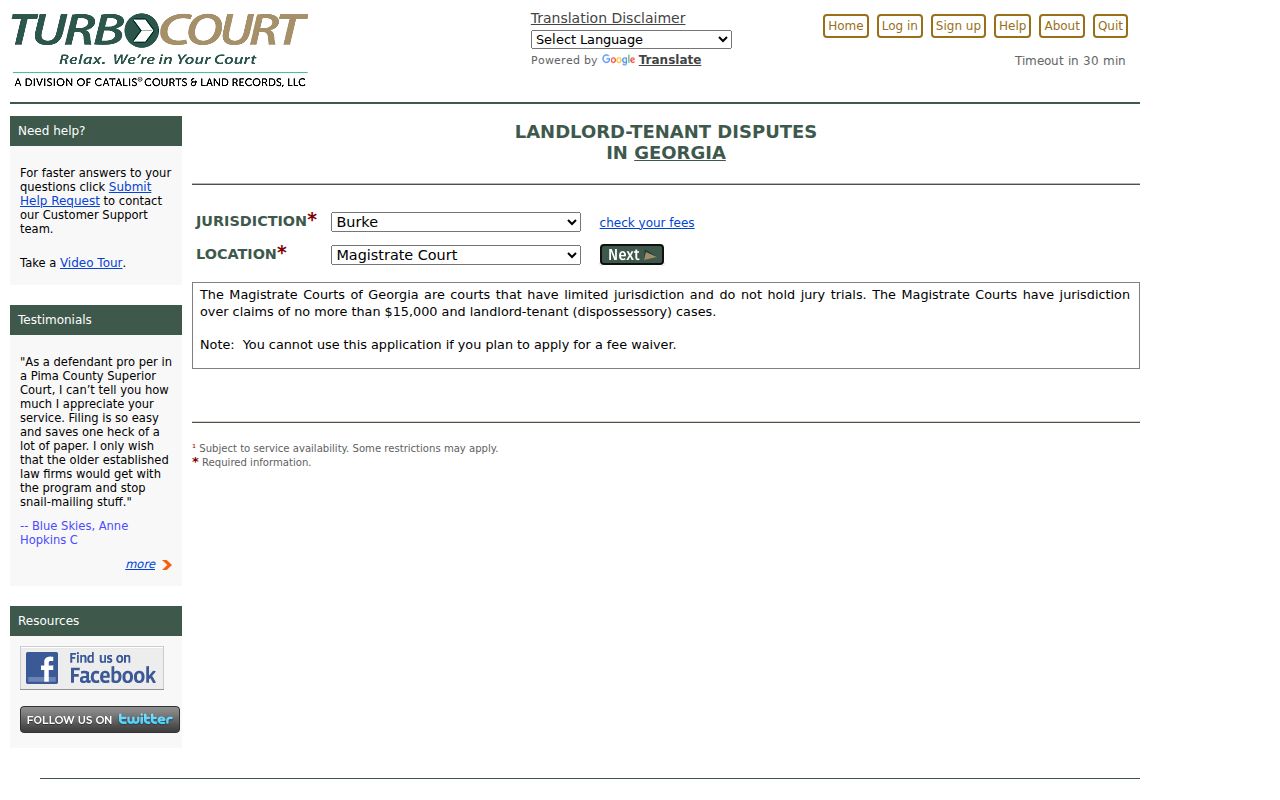
The Burke dispossessory application is a separate TurboCourt path.
Hearings on the Civil Docket
A civil setting can list date, time, hearing type, court, room, judge, and status. A calendar call manages cases and is not always the trial itself. Mediation shows up as its own Burke County civil docket entry. Motion hearings do too. So do pretrial events, and trial appears separately.
A continuance only moves a date; it never closes the case. Match the newest entry against any scheduling order, then confirm close to the event. State civil administration sits at 706-554-3460 and j.oglesby@burkecounty-ga.gov. The unified clerk remains the record custodian.
PeachCourt Document Access
Georgia's E-Access directory routes Burke State and Superior records to PeachCourt. It notes that an account is required. Georgia also names PeachCourt the mandatory e-filing provider for both courts. A provider image may carry a fee. It is not a certified copy by default.
Work the local docket first to pin down the event and filed date. Then ask where the image lives. It could be in PeachCourt, at the clerk counter, or available through a copy request. Burke posts no official price for provider images.
The PeachCourt landing page shows the account-based provider used for Burke civil filings.

Burke Judgments Need Documents
A docket line reading judgment may leave out the award. It may omit the parties bound and the duties imposed. You will not even learn whether the ruling is final from the line alone. Request the signed and entered judgment. For enforcement, also hunt for a FiFa, garnishment, satisfaction, appeal, or transfer entry.
The older readable fee schedule listed a certificate of pending action or unsatisfied judgment at $3. FiFa issuance ran $4 plus $25 recording. Appeal record preparation cost $1 per page. Check every amount against the current county schedule before you order.
Who Can See Civil Dockets
Uniform Superior Court Rule 21 sets the floor for public access to court records. Rule 21.6 spells out which identifiers are protected. Public access does not mean every Burke County civil docket page appears online or costs nothing. Domestic, guardianship, minor, medical, financial, and sealed material may be redacted. It may also be withheld pending a court ruling.
For a public civil record that already exists, Burke County gives you several ways in. The unified clerk takes Superior and State requests at 706-554-2279. You can visit the Judicial Center counter at 200 East 6th Street. Fax works at 706-554-7887, and email goes to clerkofcourtservices.burke@gsccca.org. Mail reaches the clerk at PO Box 803 in Waynesboro. State civil scheduling questions go to 706-554-3460. Magistrate files are handled at 706-554-4281. Probate questions go to 706-554-3000. PeachCourt offers an account-based provider route for State and Superior documents. Only the clerk can issue an official certification.
Keep any request narrow. Name the court and the exact case number. Add the document or event, the date, the copy type, and how you want it delivered. Family, guardianship, medical, financial, minor, and protected-person files often mix open and restricted material. So ask for the public register and any lawful redacted version instead of assuming the whole case is closed to you. The Georgia Open Records Act cannot force an office to build a new analysis or report. It also never overrides a sealing order. If access is denied, ask for the specific rule, statute, or order behind the denial. Then ask whether a separable portion can still be produced.
Key access rules:
Ask whether the whole case, one exhibit, or only protected data is withheld.
Request the separable public portion and the legal basis for any denial.
The Georgia Open Records Act does not override a court seal.